What an implant can do
- Replace a single tooth with an implant crown.
- Replace several teeth with an implant-supported bridge.
- Stabilise a loose denture.

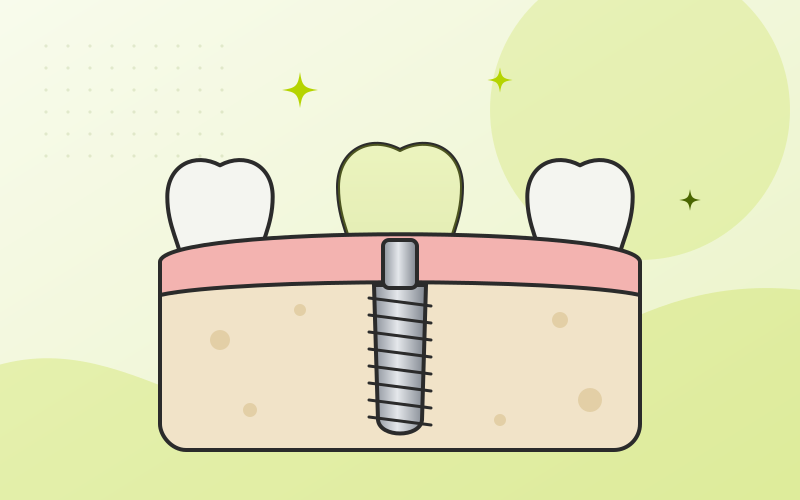
A dental implant is a small screw, usually made of titanium, placed in the jawbone to replace the root of a missing tooth. A crown (or a bridge or denture) is then attached to it. At Cabinet Nejjar in Rabat, Dr Salma Nejjar carries out the assessment and follow-up of implant treatment.
When a tooth is lost, the implant replaces its root. After a healing period during which the bone fuses with the implant (osseointegration), an artificial tooth is attached to it.
Unlike a bridge, an implant does not require the neighbouring teeth to be filed down.
An implant can be considered for adults who:
Some situations need a specific assessment: smoking, poorly controlled diabetes, gum disease, certain medical treatments. Always mention your medication and medical history during the assessment.
Clinical examination, questions about your health and imaging (X-ray, often a 3D scan) to assess the bone.
The number of implants, the steps and the timeline are explained to you.
A procedure carried out under local anaesthetic.
The bone fuses with the implant, usually over several weeks to a few months. A temporary tooth is sometimes possible.
The crown, bridge or denture is attached to the implant.
Careful hygiene and regular check-ups keep the implant healthy.
Implants are placed under local anaesthetic, so the procedure itself is usually not very painful. In the following days, some discomfort, swelling or mild pain is possible; it is usually relieved by the medication prescribed by the dentist.
There are usually several months between placing the implant and fitting the final tooth, while the bone heals. The exact timeline depends on your situation, especially if a bone graft is needed.
A well-integrated implant can last many years. Its lifespan depends mainly on oral hygiene, not smoking and regular dental check-ups.
Not always. You need enough bone (or the possibility of a graft) and compatible general health. The implant assessment shows whether an implant suits your case and, if not, which alternative to consider (bridge, removable denture).
Cabinet Nejjar, Dr Salma Nejjar's multidisciplinary dental practice, is at 11 rue Sanaa, 4th floor, Apt. 16, Avenue Moulay Youssef, Rabat. For an implant assessment: 0537 72 70 01 or WhatsApp 0768 49 00 11.
The information on this page is general and does not replace a consultation. Only a clinical examination can determine the right treatment for you.
Send us a WhatsApp message or call the practice to book an appointment with Dr Salma Nejjar in Rabat.